

Interior lighting is often discussed as a choice of color, but the shape of the light source can be the more important design decision. A continuous strip traces a line. Individual pods create separate pools of light. Neither format is inherently the right answer for every cabin. Understanding that difference gives accessory buyers and installers a more useful basis for planning an interior than simply adding another strip length to a catalog.
Think in lines and zones
A strip suits a design that calls for visual continuity along a suitable mounting run. Pods offer another approach when the aim is to illuminate selected areas without carrying that line between them. Footwells, console sides and under-seat positions can be considered as individual zones, each with its own mounting surface and viewing angle.
Begin by marking the desired illuminated areas on a cabin sketch. Then decide whether a continuous line contributes to the design or merely connects places that should remain visually separate. This is why the formats can complement one another: they answer different spatial questions. Combining them should be a deliberate design choice, not an assumption that more visible light is always better.
Make hidden placement a measured decision
A small light still needs a suitable mounting surface and a viable cable exit. Inspect candidate locations from the occupants' normal seating positions, not just from outside an open door. The objective may be to see the illuminated surface rather than the source itself. Glossy trim and nearby objects deserve attention during that evaluation.
Seat movement, pedal clearance and access to cabin controls must remain unrestricted. Keep proposed wiring away from moving mechanisms and airbag areas, following vehicle and product instructions. A low-profile component can help a layout, but thickness alone does not prove that a particular gap is suitable. Measure, temporarily position and evaluate before committing the mounting.
Use a pod kit as a concrete reference
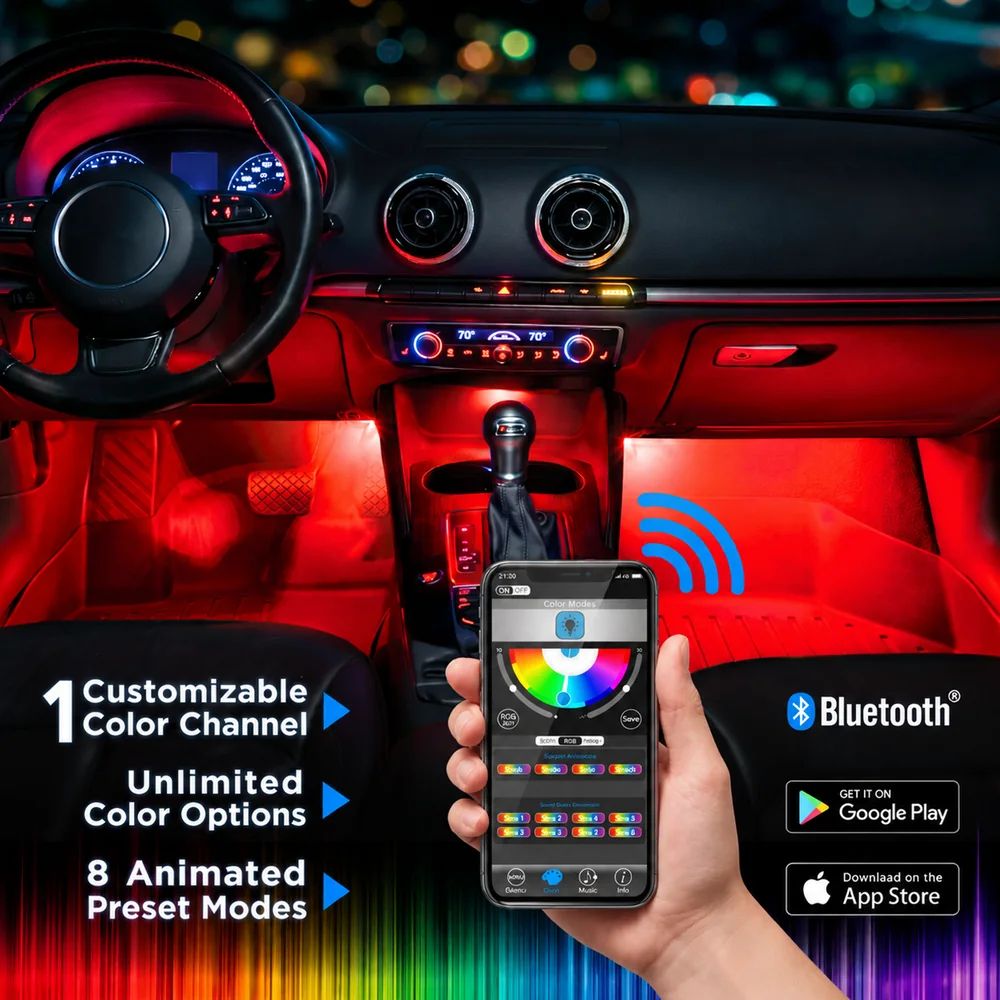
The TRENT 6-pod interior ambient light kit provides a specific example: six pods, each 8mm thick, powered through a 12V cigarette-lighter connection. The published configuration uses Bluetooth app control for iOS and Android and provides eight preset modes. Its mounting method uses pre-applied 3M adhesive, without cutting or splicing the original vehicle harness.
Those details define the example, not every interior ambient-lighting kit. Six pods mean six sources to place; they do not guarantee a predetermined lighting result in every cabin. Likewise, the 8mm measurement describes pod thickness rather than total installation clearance. Cable exits, mounting orientation and the receiving surface remain part of the fitment review.
Keep power and software expectations visible
A cigarette-lighter power connection avoids a harness-cutting step, but it still occupies a socket and requires a sensible cable route. Establish whether that socket remains powered when the vehicle is switched off, and plan operation accordingly. Check that the plug and controller placement do not obstruct normal cabin use or make routine access awkward.
For a layout containing both pods and strips, do not assume that separate kits synchronize merely because both use Bluetooth. Confirm the exact controller and app behavior if coordinated effects are required. Test the six-pod kit's selected modes independently first, then assess any proposed combination. Reserve dynamic demonstrations for a parked vehicle and account for reflections and local restrictions; decorative cabin lighting is not a primary road-lighting system.
Describe the distinction accurately in a product program
Catalog information should explain placement rather than promise commercial outcomes. A useful comparison shows the difference between a continuous illuminated line and isolated zones, along with power connection, pod count, cable layout and control details. Installation images should represent the actual sample configuration, with wiring and controller requirements documented rather than hidden from the purchasing decision.
TRENT lists private-label packaging, logo options and cable-length customization for this six-pod model. A cabin layout can therefore inform the customization brief, but the resulting configuration still needs sample approval. Review adhesive preparation instructions, routing, app operation and the intended visual effect together. Pods complement strips most convincingly when each format has a defined role and the completed interior preserves unobstructed vehicle operation.